service-design-the-big-picture
Service Design: The Big Picture
Service design is a holistic and multidisciplinary approach that focuses on creating and improving services to make them more useful, usable, and desirable for users. It goes beyond aesthetics or fixing problems — it involves designing the entire service experience across different touchpoints over time.
In this article, we’ll explore what service design is, how it differs from related fields like UX and product design, and how it can be applied effectively.
What is Service Design?
Service design is the process of creating sustainable solutions and optimal experiences for both customers and service providers. It breaks services into components and fine-tunes each one to meet users’ needs within a specific context.
This approach helps organizations solve important challenges, drive innovation, and ensure that services are designed with the full user journey in mind.
What Service Design is NOT
Not just aesthetics: It’s more than making things look good — it ensures services function well at every stage.
Not just customer service: Service design isn’t limited to fixing user complaints; it involves structuring processes, value propositions, and business models.
Not just service recovery: It’s not only about addressing issues after they happen. Service design focuses on creating valuable services from the start.
Different Perspectives on Service Design
Service design can be understood in multiple ways depending on the context:
As a mindset: A pragmatic, co-creative, and hands-on approach that balances technology, human needs, and business relevance.
As a process: A structured method using iterative research and development cycles to innovate services.
As a toolset: A collection of frameworks and methodologies that support service innovation and refinement.
As a cross-disciplinary language: Service design serves as a “glue” between different disciplines, creating a shared vocabulary for collaboration.
As a management approach: Used for both incremental improvements to existing services and radical innovation for new service models.
Illustrations from undraw.co
Service Design in Action
Core Principles of Service Design
Human-Centered: Considers the experiences of all people affected by the service.
Collaborative: Engages stakeholders from different backgrounds in the design process.
Iterative: Adapts and improves services through continuous experimentation.
Sequential: Structures the service as a sequence of interrelated actions.
Real: Tests and prototypes ideas in real-world conditions.
Holistic: Ensures sustainability by addressing the needs of all stakeholders across the entire service lifecycle.

Image based on nngroup.com ux vs servicedesign
Service Design vs. UX Design vs. Product Design
Understanding the differences between these three disciplines helps clarify how service design fits into the bigger picture:
User Experience (UX) Design: Focuses on creating intuitive and enjoyable interactions between users and digital products or services.
Product Design: Involves designing tangible or digital products that provide solutions to user problems.
Service Design: Encompasses the full end-to-end service experience, including digital touchpoints, physical infrastructure, and operational processes.
Think of UX design as the tip of an iceberg, while service design represents everything beneath the surface that makes the experience possible.
Real-World Applications of Service Design
Use Case: Starbucks During the COVID-19 Crisis
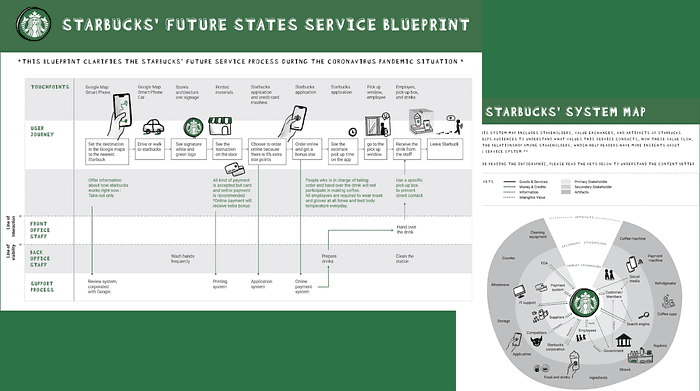
Starbucks analyzed potential risks, customer behavior, and operational challenges to improve safety and efficiency. Why we should wear masks and wash hands frequently, What Starbucks can be improved in the future , and Where is the potential risks of the journey.
They used tools such as:
System Maps to understand the entire service ecosystem.
Journey Maps to visualize customer interactions.
Service Blueprints to align frontstage and backstage processes.
Starbucks during the Covid-19 crisis
Press enter or click to view image in full size
Source: https://www.pirpie.com/project/service-design-experiment
Use Case: British Columbia Government & Autism Services
The government applied service design to improve autism-related services by:
Build the capacity of the autism program to take a human-centred approach to service design at the completion of the project
Understand the experience of parents, autism service providers, and Ministry of Children and Family Development (MCFD) when accessing or delivering services
Improve the existing direction of government autism
Identify and implement opportunities to improve the service
Process:
In-depth field research: Speak with parents, social workers, service providers, and internal staff.
Creation of user artifacts: Research findings. Issues to understand the program and funding rules. Journey maps, user personas, new web content prototype.
Measurement of current internal processes: Time consuming and long process approvals. Track errors, denials, and form processing.
Content design within the BC Government CMS: Web content and autism policy handbook. Create a new home for autism content within the gov.bc.ca website. Images, infographics, page layouts. Straight-forward and parent friendly information.
Prototype testing with real users.
Building a better search tool.
The New Autism Website
Clearer policy for the autism program.
Information access in one place.
One-on-one support in-person and over the phone.
An ongoing human-centred approach to service design.
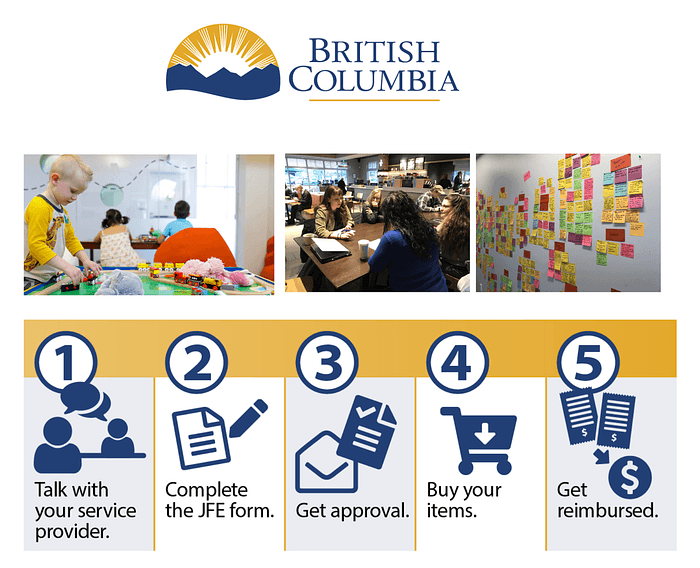
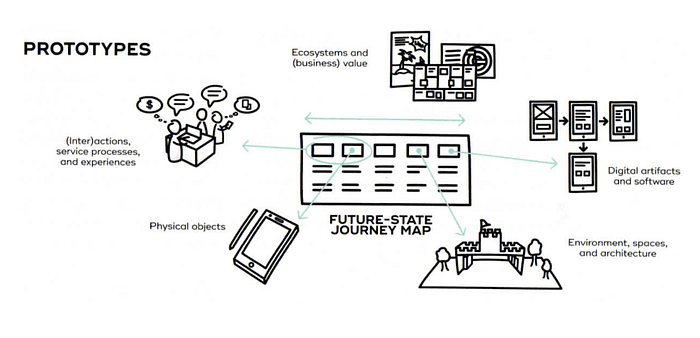
Image from This Is Service Design Doing Book
Key Tools in Service Design
Service designers use various tools to analyze, visualize, and improve services:
Personas: Represent different user types and their needs.
Journey Maps: Illustrate the user’s entire experience with a service.
Service Blueprints: Connect customer experiences with internal operations.
Prototyping: Allows teams to test and refine service interactions before implementation.
System Maps: Show relationships between different service components.
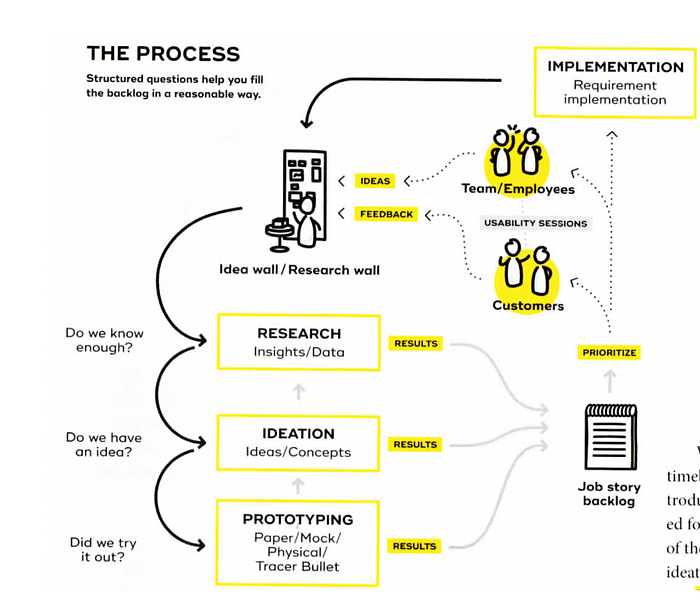
Image from This Is Service Design Doing Book
From Design to Implementation
Effective service design doesn’t stop at creating concepts; it must lead to tangible improvements. Implementation involves:
Piloting new services: Testing small-scale versions before full rollout.
Filling backlogs with meaningful user insights: Using real needs, not assumptions, to prioritize improvements.
Continuous iteration: Refining services through ongoing feedback and testing.
Conclusion
Service design is about designing experiences that are seamless, sustainable, and valuable for both users and providers. It integrates research, collaboration, and continuous iteration to create meaningful and efficient services.
By embracing service design principles, organizations can innovate, enhance customer satisfaction, and create services that truly meet user needs. Whether you’re refining an existing service or developing something entirely new, taking a service design approach ensures you consider the full picture, beyond just individual touchpoints.
✏️ Illustrations: https://undraw.co
Let's work together to create designs that are both beautiful and practical!